
11:00 – 01:00 Daily
___
Elvara Spa Abu Dhabi infuses the concept of well-being throughout your entire experience, evolving healthy practices to inspire an elevated lifestyle.
Massage for Headaches and Migraines
Many everyday headaches start in the neck and shoulders. When those muscles stay tight for hours, the tension can spread up the back of the head and into the temples. Massage can help relax those muscles, and many people find their tension headaches ease as a result. Migraines are different: they have their own causes, and massage is not a treatment for them, although some people find it helps them relax between attacks.
Tension headaches and the neck
The most common type of headache feels like a band or pressure around the head, often worse by the end of the day. It is usually linked to stress, poor sleep, long hours at a screen and a head pushed forward toward a laptop or phone. The muscles at the base of the skull, along the neck and across the top of the shoulders work hard to hold the head in that position, and they tighten.
That is where massage helps most. Relaxing the upper back, shoulders and neck can take pressure off the area where these headaches seem to start. Many guests who book a massage for a stiff neck mention afterwards that their head feels clearer too.
How migraines are different
A migraine is not simply a strong headache. It often comes with throbbing pain on one side of the head, sensitivity to light and sound, nausea, and sometimes visual changes before the pain starts. Migraines have their own triggers and patterns, and they need a doctor's advice and, often, specific treatment.
Massage does not stop a migraine and is not a substitute for medical care. Some people who get migraines find that regular massage helps them manage the stress and muscle tension that can come with them. If you have a migraine diagnosis, ask your doctor whether massage is a good idea for you.
During an attack, or between attacks?
Most people with migraines prefer not to be touched during an attack. Light, sound and movement can make it worse, and lying on a massage table is usually the last thing they want. If you feel a migraine coming on, it is better to rest and follow your doctor's plan, and reschedule the massage. Message us on WhatsApp and we will move your booking.
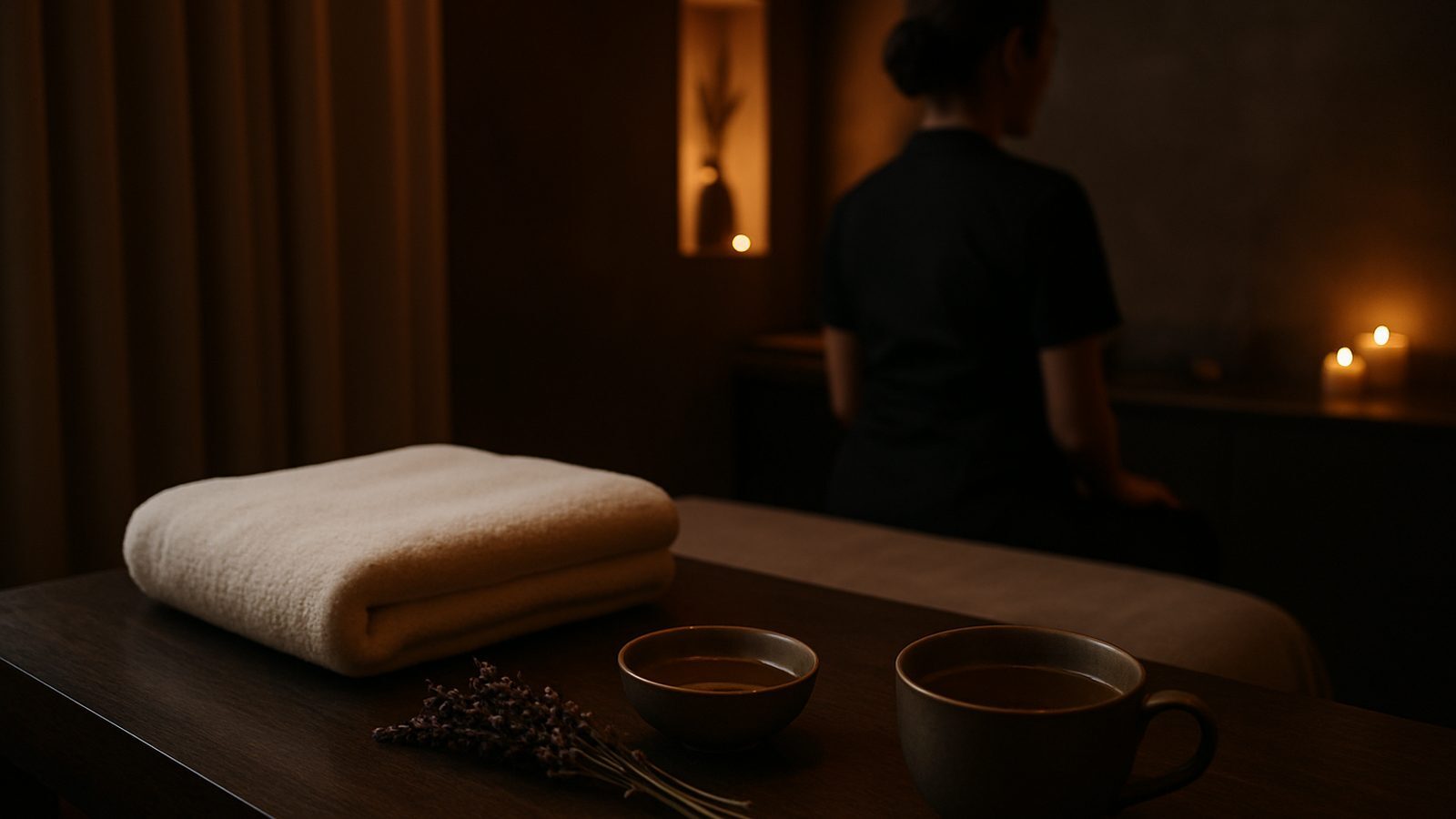
Between attacks, a calm, gentle massage in a quiet, dim room is a different matter, and many guests find it relaxing.
Which areas a therapist works on
For headaches linked to tension, the therapist usually focuses on:
- the upper back and between the shoulder blades;
- the tops of the shoulders, where many people carry stress;
- the sides and back of the neck;
- the base of the skull, with gentle, slow pressure;
- the scalp and temples, if you would like.
Pressure on the neck should always be gentle to medium. The neck is not the place for strong deep tissue work, and a good therapist stays careful there even if you ask for firm pressure on the back.
Which massage to book
- The 30 minute back and shoulder massage, AED 400, focuses on exactly the areas above. It fits into a lunch break and is a good choice if your headaches come with a stiff neck after work.
- An aromatherapy massage, from AED 700, is gentle and slow, with essential oils chosen for calm. Some scents can trigger headaches in some people, so tell the therapist and ask for an unscented or very light blend if needed. Our aromatherapy oils guide explains the common choices.
- A Swedish massage, from AED 650, works over the whole body at medium pressure, with extra time on the shoulders and neck if you ask.
If your headaches come with a stiff back as well, see our page on massage for back pain.
What to tell the therapist
Tell the therapist that you get headaches and where you usually feel them. Mention if you have a migraine diagnosis, if bright light or strong smells bother you, and if any position, such as lying face down, makes things worse. We can dim the lights, use an unscented oil and adjust your position so you are comfortable.
Habits that help between sessions
Massage works better alongside a few simple habits. Raise your screen to eye level so your head is not pushed forward. Take short breaks from the screen every 30 to 45 minutes. Drink water during the day. Roll your shoulders back and down a few times an hour. Keep a regular sleep routine where you can. None of this replaces medical advice, but it often decides how long the effect of a massage lasts.
When to see a doctor
See a doctor before booking a massage, or urgently, if you have:
- a sudden, very severe headache, the worst you have ever had;
- a headache with fever, a stiff neck, confusion or a rash;
- a headache after a head injury or a fall;
- weakness, numbness, difficulty speaking or changes in vision;
- headaches that are new, getting steadily worse, or wake you at night.
These need medical assessment, not massage.


Discover How Our Spa has Transformed Lives: Testimonials Unveiled
