
11:00 – 01:00 Daily
___
Elvara Spa Abu Dhabi infuses the concept of well-being throughout your entire experience, evolving healthy practices to inspire an elevated lifestyle.
Does Deep Tissue Massage Hurt?
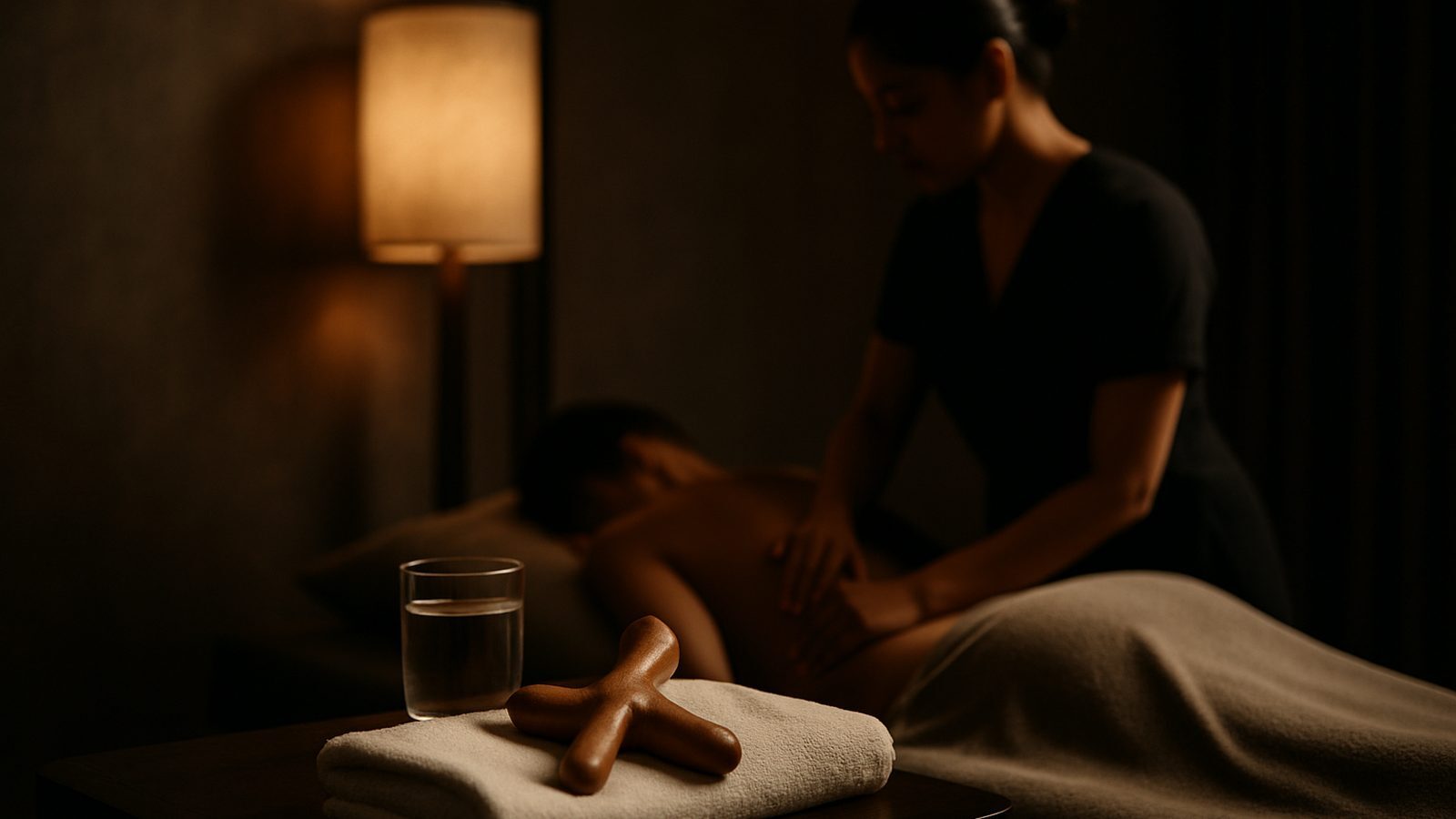
Deep tissue massage can feel intense, but it should not hurt in a sharp or shooting way. A strong, dull pressure on a tight muscle is normal. Mild soreness for 24 to 48 hours afterwards is also common. Anything sharp, burning or numb is a signal to stop and tell the therapist.
Why deep tissue feels stronger than other massages
In a relaxing massage, the therapist works over the surface of the muscles at a steady pace. In deep tissue, the pace slows and the pressure goes deeper, into the thicker layers of muscle and the connective tissue around them. Areas that have been tight for months, like the upper back of someone who works at a laptop, are often more sensitive than you expect. Pressing into them can feel like finding a bruise you did not know you had.
That sensitivity is the reason deep tissue feels strong. It is also the reason the pressure has to be right: too light and nothing changes, too heavy and the muscle braces against the therapist.
What normal feels like
On a tight area, you may feel pressure that is right at the edge of comfortable, the kind people describe as "good pain". It usually eases within a few seconds as the muscle softens. Your breathing should stay calm. If you find yourself holding your breath or tensing up, the pressure is too strong and the massage becomes less effective, because the muscle fights back.
A useful test: you should be able to relax into the pressure. If you cannot, ask for less.
What is not normal
Sharp or stabbing pain, pain that shoots down an arm or leg, numbness or tingling, burning, or pain over a bone or joint. If any of these happen, say so immediately. A good therapist will change the angle or pressure, or move on to another area.
Pain that is still strong several days later, or bruising after the session, is also not expected. If you bruise easily or take blood thinners, deep tissue may not be the right treatment, and you should mention it before booking.
How to talk about pressure
Use a simple scale. Before the session, tell the therapist you want pressure around 6 or 7 out of 10, and during it, say "less" or "more" whenever you need. You can also ask for firm work on the shoulders and lighter work elsewhere. Pressure does not have to be the same everywhere, and most people want it uneven.
At Elvara, the therapist checks in during the session, but you do not need to wait to be asked. Saying "a bit lighter please" is normal, and it does not offend anyone. Our team includes therapists from Russia, Belarus, Ukraine, Georgia and Turkey, and you can mention your preferred language when you book.
Before your session
A few simple things make deep tissue more comfortable. Avoid a heavy meal in the hour before. Drink water during the day. Arrive a few minutes early so you are not rushing onto the table with your shoulders already up by your ears. And tell the therapist where the problem is: "left side of the neck when I turn my head" is far more useful than "my back hurts".
Soreness afterwards
Mild muscle soreness the next day is common, especially after a first deep tissue session or if the area was very tight. It feels similar to soreness after a workout and usually fades within two days.
To help it pass, drink water, take a warm shower and keep moving gently. A walk is better than lying still all evening. Avoid heavy training on the same day. If you train the next day, keep it light for the areas that were worked on.
Does it get easier?
For many people, yes. The first session often feels the strongest, because the therapist is finding tight spots for the first time. With regular sessions, many guests find the same pressure feels less intense. Once a week or every two weeks is a common rhythm for people dealing with desk tension or regular training.
When to skip deep tissue
If you have a recent injury, recent surgery, a blood clotting condition, take blood thinners, or are pregnant, tell us before booking. In these cases a gentler treatment, or a doctor's advice first, is the safer choice. The same applies to pain after a fall or accident, or pain with numbness or weakness.
If you are not sure deep tissue is right for you, read Swedish vs deep tissue. A Swedish massage with firmer work on one area is often a good first step. For back problems in particular, see massage for back pain.
Booking
Our deep tissue massage costs AED 700 for 60 minutes and AED 900 for 90 minutes. If only your neck and shoulders are tight, the 30 minute back and shoulder massage for AED 400 may be enough. All prices are on the price page.


Discover How Our Spa has Transformed Lives: Testimonials Unveiled
